
The stone fabrication industry operates on the razor's edge of precision and efficiency. For workshop managers and procurement officers, the choice of cutting tool dictates not only the quality of the final slab but also the profitability of the project. Selecting a reliable granite cutting blade supplier is therefore a strategic decision that goes beyond simple price comparison. It requires an understanding of metallurgy, application engineering, and supply chain consistency.
The Metallurgy of Efficiency
Granite is a highly abrasive, siliceous stone with a Mohs hardness that demands respect. Unlike softer stones, cutting granite requires a diamond blade with a specific "bond" the metal matrix that holds the diamond crystals in place. A high quality supplier understands that the bond must be engineered to wear away at a precise rate, constantly exposing fresh, sharp diamond crystals to the stone.
When evaluating a granite cutting blade supplier, buyers should look for partners who can explain the metallurgy behind their products. Whether it is a hot pressed or cold pressed segment, or the use of specific alloys like cobalt or bronze, the supplier's technical knowledge is a proxy for the product's quality. A blade that is too hard will glaze over and stop cutting; a blade that is too soft will wear out prematurely. The right supplier provides the "Goldilocks" solution tailored to the specific granite variety be it the abrasive grain of White Padang or the dense hardness of Black Galaxy.
Segmentation and Application Specifics
Not all granite cutting is the same. The industry is moving away from "universal" blades toward highly specialized tools designed for specific machinery and outcomes. A competent supplier will stock a diverse range of segment designs:
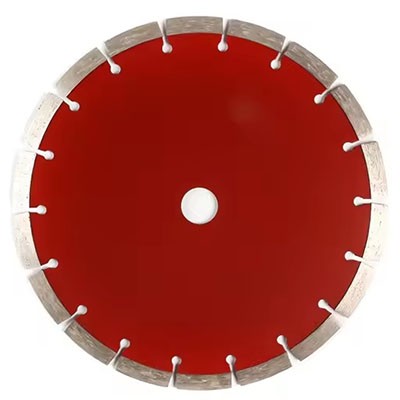
Turbo Segments: Featuring a serrated rim, these are designed for faster cutting speeds and are ideal for general fabrication work where a balance between speed and edge quality is needed.
Continuous Rim: These blades offer chip free cutting, essential for delicate materials or when the edge will be visible.
Multi Layer Segments: Designed for deep cutting and high stability, often used in bridge saws for heavy duty slabbing.
A supplier who asks about your machine's horsepower, RPM, and whether you are cutting wet or dry is a partner worth keeping. They understand that using a blade designed for a high speed angle grinder on a low speed block cutter can lead to catastrophic failure.
The Economics of "Cost Per Cut"
In the procurement world, the sticker price is often a distraction. The true metric of value in the stone industry is the "cost per cut" or "cost per linear meter." A cheaper blade that lasts for 500 cuts is a poor investment compared to a premium blade that lasts for 2,000 cuts, even if the upfront cost is double.
Leading suppliers focus on total cost of ownership. They provide data on expected blade life and cutting rates, helping fabricators calculate the true operational cost. By optimizing the blade selection, a supplier can help a shop save thousands of dollars annually in reduced downtime and fewer blade changes.
Contact:Kevin
Phone:+86 18362001166
E-mail:yabon_kevin@163.com
Add:No. 253, Dongfang Industrial Park, Houxiang, Danbei Town, Danyang City, Jiangsu Province, China