
The global diamond saw manufacturing industry is a highly specialized sector that sits at the intersection of advanced materials science and precision engineering. As critical components in construction, stone processing, semiconductor fabrication, and automotive industries, diamond saws require sophisticated supply chains and technical expertise. Consequently, manufacturing hubs have emerged in specific regions where technological capabilities, raw material access, and industrial demand converge. Understanding this geographic distribution provides valuable insights into global supply chain dynamics and market trends.
China diamond saw manufacturing ltd: The Unrivaled Global Production Powerhouse
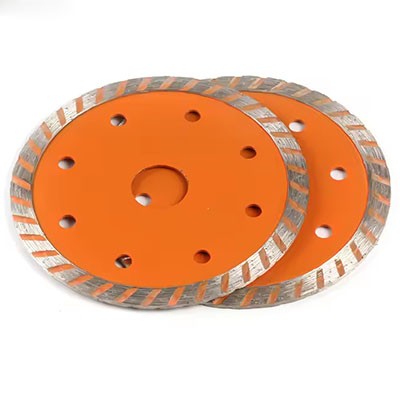
China has established itself as the undisputed leader in diamond saw manufacturing, dominating both volume and supply chain integration. The country's supremacy is particularly evident in its superhard materials sector. Regions such as Henan province serve as the foundational bedrock for the industry; it is reported that China produces over 95% of the world's industrial diamonds, with Henan alone accounting for approximately 80% of that national output. This massive upstream advantage allows Chinese manufacturers to control costs and ensure material availability. Furthermore, clusters like Ezhou in Hubei province have evolved into comprehensive industrial bases, often referred to as the "First Town of Diamond Tools in China." These regional clusters benefit from decades of accumulated expertise, extensive local supply chains, and aggressive international expansion strategies that have successfully placed Chinese-manufactured saw blades in markets across Asia, Africa, Europe, and the Americas.
European Nations: Pioneers in High-Precision Engineering
While China leads in scale, several European countries remain at the forefront of high-end, precision diamond tooling. Nations such as Switzerland, Germany, Italy, and Hungary are renowned for producing premium-grade diamond saws tailored for demanding applications. For instance, Swiss and German manufacturers leverage their deep-rooted traditions in mechanical engineering and metallurgy to create highly durable cutting solutions for aerospace, optical glass, and advanced ceramics. Additionally, countries like Hungary and Portugal have developed robust manufacturing ecosystems focused on flexible diamond tools and specialized grinding technologies. These European firms typically compete on superior technological innovation, stringent quality control, and customized engineering solutions rather than competing solely on price.
Emerging Asian Markets: Strategic Expansion and Localization
Beyond China, other Asian nations are increasingly carving out significant niches within the diamond saw manufacturing landscape. India is rapidly emerging as a major player, driven by its booming domestic construction sector and expanding infrastructure projects. Local manufacturers are scaling up production to meet internal demand while also beginning to export competitively priced tools. Similarly, Southeast Asian countries like Vietnam and Thailand are attracting foreign direct investment and establishing local manufacturing facilities. This trend is largely driven by multinational companies seeking to localize their supply chains to mitigate geopolitical risks, reduce shipping costs, and provide faster turnaround times for regional clients.
North America: Specialized Applications and Advanced R&D
In North America, particularly the United States and Canada, diamond saw manufacturing is characterized by a focus on high-value, specialized applications rather than mass-market commodity products. Manufacturers in this region excel in producing diamond cutting equipment and consumables for the semiconductor and photovoltaic industries, where extreme precision is non-negotiable. Furthermore, North American companies are heavily invested in research and development, pioneering next-generation technologies such as diamond cooling systems for high-power chips and advanced laser-cutting machinery. While domestic manufacturing volumes may be lower compared to Asian counterparts, the region remains a vital hub for intellectual property, software-integrated cutting systems, and serving highly regulated domestic markets.
Contact:Kevin
Phone:+86 18362001166
E-mail:yabon_kevin@163.com
Add:No. 253, Dongfang Industrial Park, Houxiang, Danbei Town, Danyang City, Jiangsu Province, China