
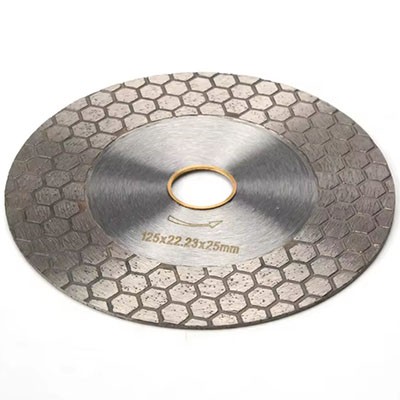
In high-performance material processing, the efficiency and accuracy of cutting operations hinge on one critical component: the diamond saw blade. Engineered for durability and precision, modern diamond saw blades are indispensable across construction, stone fabrication, ceramics, and advanced manufacturing sectors delivering clean cuts, extended service life, and consistent performance even under demanding conditions.
Engineered for Challenging Materials
Diamond saw blades excel where conventional tools fail. Whether slicing through reinforced concrete, granite countertops, porcelain tiles, or engineered composites, their segmented or continuous-rim designs embedded with industrial-grade diamond grit ensure rapid material removal with minimal chipping or overheating. The bond matrix is carefully calibrated to match the hardness of the workpiece, enabling optimal diamond exposure and wear resistance.
Wet vs. Dry Cutting: Optimized for Application Needs
Depending on the operational environment, users can select between wet-cutting and dry-cutting variants. Wet blades rely on water cooling to suppress dust and extend blade life ideal for indoor stonework or compliance-sensitive sites. Dry-cutting models feature specialized heat-resistant bonds and laser-cut expansion slots to manage thermal stress, making them suitable for outdoor construction or emergency utility cuts where water access is limited.
Advanced Core Design for Stability and Safety
The steel core isn’t just a support structure it’s a precision-engineered component that minimizes vibration and deflection at high RPMs. Tensioned cores with noise-reducing features enhance operator comfort, while reinforced arbor holes ensure secure mounting and reduce runout. These details contribute not only to cut quality but also to workplace safety during prolonged use.
Sustainability Through Longevity and Efficiency
A high-quality diamond saw blade reduces the frequency of replacements, lowering both material waste and downtime. Many modern designs also support re-tipping or recycling programs, aligning with circular economy principles in industrial procurement. Efficient cutting further translates to lower energy consumption per linear meter supporting ESG goals in large-scale projects.
Choosing the Right Blade for Your Workflow
Selecting the appropriate blade involves more than diameter and arbor size. Key considerations include:
Material type (soft stone vs. abrasive concrete vs. brittle ceramic)
Desired cut speed versus finish quality
Equipment compatibility (angle grinders, table saws, bridge saws, or walk-behind saws)
Compliance with regional safety standards (e.g., EN 13236, OSHA guidelines)
By matching blade specifications to application demands, operators achieve higher productivity, reduced tooling costs, and superior end results.
As industries continue to adopt harder, more complex materials from ultra-compact surfaces to fiber-reinforced concretes the role of the diamond saw blade evolves from a simple consumable to a strategic asset in precision fabrication. Investing in the right cutting solution ensures reliability, safety, and performance at every pass.
Diamond Saw Manufacturing Ltd, Precision Blades, Engineered to Cut
Contact:Kevin
Phone:+86 18362001166
E-mail:yabon_kevin@163.com
Add:No. 253, Dongfang Industrial Park, Houxiang, Danbei Town, Danyang City, Jiangsu Province, China